No products in the cart.

Positive affirmations for kids are short, kind sentences a child hears or says out loud, such as “I can try new things.” Pick one or two a day, say them together at a regular time, and keep them short. Here are 50 original ones you can use, grouped by theme.
Affirmations are not a magic fix. They are a small daily habit that gives children a kind way to talk about themselves, especially on hard days. The habit matters more than the words. A parent who says one calm sentence at bedtime each night builds a routine the child comes to expect.
Say it and let your child echo you. Use one sentence at a time, at a fixed moment such as brushing teeth or bedtime. Hold the child’s hand or sit close. Keep it playful, with a funny voice if it helps.
Let your child pick the affirmation of the day. Write it on a sticky note for the school bag or the mirror. At dinner, ask: “What was a time today that you used it?”
Older children can be shy about saying things aloud. Offer a notebook where they write one sentence in their own words, or let them change the wording. If they roll their eyes, let it go and try again another day.
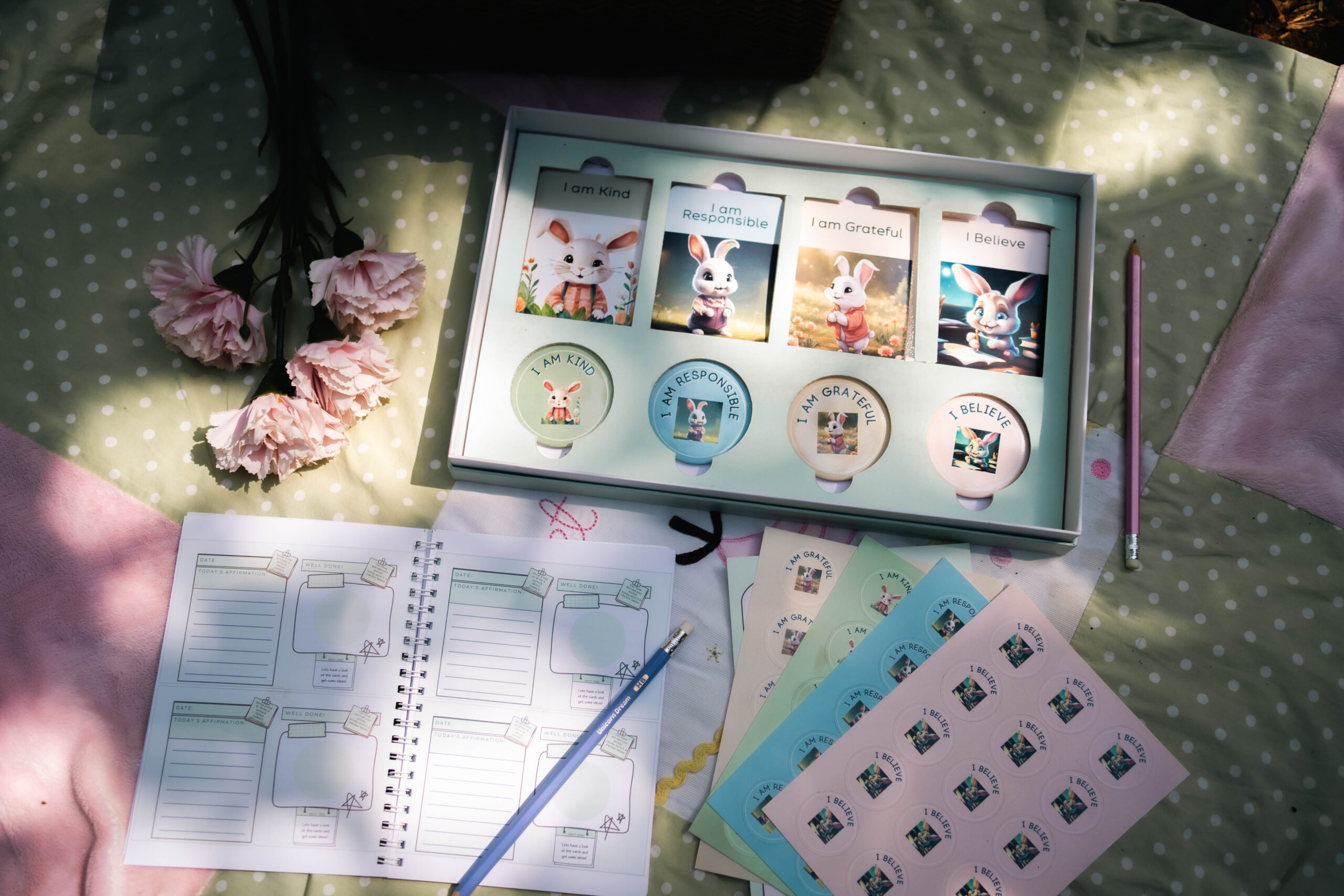
Some families prefer a physical card to pick each day. At Joyful Souls we make affirmation cards by age: the A to Z Affirmations with Poems (₹450) for ages 3 to 5, the A to Z Affirmations with Short Stories (₹450) for ages 6 to 12, and the Affirmation Cards Set of Four (₹300) for ages 3 to 10. They are one option among many, and the sentences above work just as well on a sticky note.
Some children say “that is not true” or laugh it off. That is a normal reaction, especially from age 7 or 8. Do not argue. Swap the sentence for a smaller one, such as “I am trying” instead of “I am brilliant”, or ask the child to write their own. Affirmations should feel like a friendly voice, not a script. Children who feel pushed to say the words will often stop, while children who are invited to choose them tend to come back.
Pair the words with action where you can. If the affirmation is “I can ask for help”, model it yourself the next time you need a hand, and say so aloud.
One to three is plenty. A single sentence said calmly beats a long list recited quickly.
From around age 2 or 3, when children can repeat short sentences. Younger children benefit from hearing kind words from you.
It can help, but it is not needed. Some children find it awkward, and bedtime or the car ride work just as well.
Take that seriously and change the wording to something they can accept, such as “I am learning” instead of “I am perfect”.
Yes. Say them in whichever language your child thinks in. Our own products are in English only.